The Ultimate Guide to Collagen
Everything You Need to Know About Collagen... Without the Marketing Hype
By The Holistic Golfer™
The Bottom Line (30-Second Summary)
If you're short on time, here's what you need to know:
- Collagen is one of the most abundant and important proteins in your body.
- Not all collagen supplements are the same. Different types serve different purposes.
- Type I & III collagen are best for skin, tendons, ligaments, and bones.
- Type II collagen (UC-II®) is primarily for cartilage and joint health.
- Vitamin C is essential for your body to build collagen properly.
- Many collagen products are marketed better than they are formulated.
- The best collagen isn't the most expensive one—it's the one that matches your goals.
Before We Begin
If you're looking for someone to tell you exactly what supplement to buy, you may be disappointed.
That's not my philosophy.
My goal isn't to make your decisions for you.
My goal is to give you the knowledge, the scientific evidence, and the practical experience you need to make the decision that's right for your body, your goals, and your lifestyle.
Throughout this guide I'll explain:
- What the research supports
- What the research doesn't support
- Where supplement marketing gets ahead of the science
- How I approach this topic with my own clients
By the end, you may decide collagen is right for you.
Or you may decide it isn't.
Either way, if you leave feeling more informed and more confident in your decision, then this guide has accomplished exactly what it was designed to do.
Welcome
One of the supplements I get asked about the most is collagen. "Are collagen peptides better than regular collagen?", "What kind of collagen do I need?", "Will collagen make my skin healthier?"... and the list goes on. Because of the potential anti-aging benefits of collagen, there are a lot of companies that are trying to tell you that you need their collagen for a bunch of different reasons. As you know, I am not a big fan of following what the T.V. or internet tells me to do, instead I am a big fan of doing my own research and deciding what is best for me, so I decided to create this guide on collagen, so you can be properly informed and make a decision about collagen for yourself.
Walk into almost any supplement store today and you'll see an entire aisle dedicated to collagen.
- Powders.
- Capsules.
- Protein bars.
- Coffee creamers.
- Energy drinks.
- Even collagen-infused popcorn.
Every company promises healthier skin, stronger joints, thicker hair, faster recovery, or younger-looking skin. Some products cost less than twenty dollars, while others cost over one hundred dollars for a month's supply.
So who's telling the truth?
The honest answer is...
Some of them.
Collagen is one of the few supplements that actually has a growing body of scientific evidence supporting several of its uses. That's good news.
The bad news is that many companies take those legitimate studies and stretch the conclusions far beyond what the research actually shows.
Some imply that all collagen is the same.
Others suggest that more types of collagen automatically mean a better product.
Some rely on celebrity endorsements instead of science.
Others hide behind phrases like "proprietary blend," "medical grade," or "clinically proven" without clearly explaining what those terms actually mean.
That's exactly why I wrote this guide.
My goal isn't to convince you to buy collagen.
My goal is to help you understand it.
Because when you understand the science, you become much harder to fool by clever marketing.
Why Trust This Guide
The supplement industry is full of opinions.
This guide is built on something much more valuable:
- Peer-reviewed human research
- Systematic reviews
- Meta-analyses
- Position statements from respected scientific organizations
- Practical experience working with active adults and golfers
Whenever possible, I'll explain what we know, what we think we know, and what we simply don't know yet.
Science is constantly evolving, and I believe the best educators are honest about both the strengths and the limitations of the evidence.
Throughout this guide you'll also find several features that I hope become valuable tools for making informed decisions.
- 🔬 Research Spotlight — Plain-English summaries of important studies.
- 🚩 Marketing Myth — Common supplement claims explained (or debunked).
- 🏌️ The Golfer's Perspective — Why each topic matters for golfers and active adults.
- 💡 Did You Know? — Interesting science facts worth remembering.
- ⭐ The Holistic Golfer™ Evidence Scorecard — My overall assessment based on the strength of the available evidence.
My hope is that by the time you finish reading, you'll not only know more about collagen you'll also know how to evaluate supplement claims with a more critical eye.
What Is Collagen?
If proteins were the building materials of the human body, collagen would be the structural framework holding everything together.
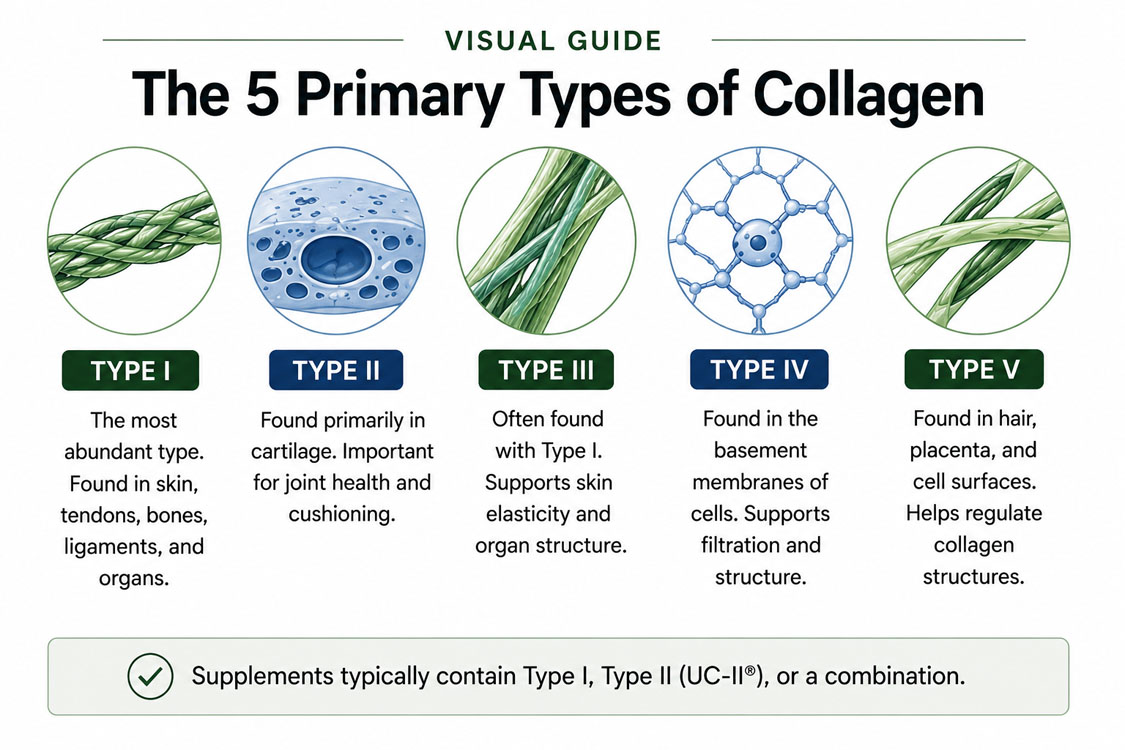
Collagen is the most abundant protein in the human body, accounting for approximately 30% of your body's total protein. It provides strength, stability, and flexibility to many of the tissues that allow you to move, perform, and recover every day.
It's found throughout the body, including:
- Skin
- Tendons
- Ligaments
- Cartilage
- Bones
- Blood vessels
- Teeth
- Corneas
- Fascia
- Internal organs
Without collagen, your body would lose much of its structural integrity.
Think of collagen as the steel framework inside a skyscraper.
You rarely notice it.
But if it weren't there, everything else would begin to fail.
Unlike proteins such as whey or casein, which are primarily valued for stimulating muscle protein synthesis, collagen's greatest role is supporting the connective tissues that hold your body together.
This distinction is incredibly important and one of the biggest reasons collagen is so often misunderstood.
The Golfer's Perspective
A golf swing lasts only about one second.
Yet during that brief moment, your body generates and transfers force through nearly every major joint.
Your feet push into the ground.
Your hips rotate explosively.
Your spine twists.
Your shoulders accelerate and then rapidly decelerate the club.
Your elbows and wrists absorb tremendous repetitive stress.
While muscles often recover relatively quickly because they receive a rich blood supply, tendons and ligaments recover much more slowly.
That's one reason injuries such as golfer's elbow, rotator cuff irritation, Achilles tendinopathy, and chronic knee pain can linger for months.
Whether you play once a week or practice every day, maintaining healthy connective tissue becomes increasingly important with age.
Research Spotlight
Why are scientists so interested in collagen?
Over the past two decades, researchers have published hundreds of studies investigating collagen supplementation.
The strongest evidence currently supports benefits for:
- Skin hydration
- Skin elasticity
- Joint comfort
- Certain forms of osteoarthritis
- Connective tissue health
Research on muscle growth, athletic performance, and injury prevention is promising but less conclusive.
One important lesson emerges from the literature:
Collagen appears to be most effective when used to support connective tissue not as a replacement for complete dietary protein.
⭐ The Holistic Golfer™ Evidence Scorecard
| Category | Rating | Why It Earned This Score |
|---|---|---|
| Scientific Evidence | ⭐⭐⭐⭐⭐ | Strong evidence for skin health and joint support, with growing evidence for connective tissue health. |
| Safety | ⭐⭐⭐⭐⭐ | Well tolerated by most healthy adults when used as directed. |
| Cost Effectiveness | ⭐⭐⭐⭐☆ | Generally affordable and widely available, though premium pricing isn't always justified. |
| Ease of Use | ⭐⭐⭐⭐⭐ | Mixes easily into drinks and fits into almost any nutrition routine. |
| Research Consistency | ⭐⭐⭐⭐☆ | Most high-quality studies point in a similar direction, though not every claim is equally supported. |
| My Recommendation | ⭐⭐⭐⭐⭐ | One of the more evidence-supported supplements when chosen for the right purpose—not a miracle product, but a useful tool within a healthy lifestyle. |
What's Next?
Now that you understand what collagen is and why it matters the next question is just as important:
Which type of collagen do you actually need?
In the next section, we'll explore the different collagen types, explain what each one does in the body, and help you avoid one of the biggest marketing traps in the supplement industry: buying the wrong collagen for your goals.
Part 2: How Collagen Really Works
Hydrolyzed Collagen, Collagen Peptides, Gelatin, and the Science Behind Supplementation
If you've ever shopped for collagen, you've probably seen terms like:
- Hydrolyzed Collagen
- Collagen Peptides
- Marine Peptides
- Bioactive Peptides
- Gelatin
- UC-II®
- Multi-Collagen Complex
At first glance, it seems like every company has invented a new type of collagen.
The reality?
Many of these terms describe very similar products, while others represent completely different forms of collagen with unique purposes.
Understanding these differences may be the single most important factor in choosing the right supplement.
Hydrolyzed Collagen vs. Collagen Peptides
Let's clear up one of the biggest misconceptions first.
Hydrolyzed collagen and collagen peptides are almost always the same thing.
Hydrolysis is simply a manufacturing process.
Large collagen proteins are broken into much smaller chains of amino acids called peptides.
Why does that matter?
Because smaller peptides dissolve easily, mix well into drinks, and are easier for your digestive system to process.
So if one company advertises "collagen peptides" while another advertises "hydrolyzed collagen," don't assume they're different products.
Most of the time, they're simply using different marketing language.
Marketing Myth
"Our Bioactive Peptides Are Superior."
Reality: Maybe but ask for evidence.
The word bioactive sounds impressive.
Technically, collagen peptides can have biological activity after digestion, meaning some appear to act as signaling molecules that may stimulate connective tissue cells.
However, many companies use the word bioactive without publishing any research on their specific product.
Whenever you see phrases like:
- Bioactive
- Advanced Peptide Matrix
- Premium Peptide Technology
ask yourself one question:
"Compared to what?"
Marketing language should never replace scientific evidence.
What About Gelatin?
Before collagen powders became popular, gelatin was the original collagen supplement.
In fact, gelatin is simply cooked collagen.
The difference lies in processing.
| Gelatin | Hydrolyzed Collagen |
|---|---|
| Thickens liquids | Mixes easily |
| Forms a gel | Dissolves completely |
| Used in cooking | Used in beverages |
| Larger protein chains | Smaller peptide chains |
Nutritionally, they're very similar.
Functionally, collagen peptides are simply much easier to consume every day.
Does Collagen Survive Digestion?
This is probably the most common criticism of collagen supplements.
Many people assume:
"I eat collagen...
my stomach digests it...
therefore it can't possibly help my tendons or skin."
That sounds logical.
But biology is rarely that simple.
Research Spotlight
For many years scientists believed collagen was broken down completely into individual amino acids during digestion.
More recent research has changed that understanding.
Studies have identified several collagen-derived peptides including prolyl-hydroxyproline (Pro-Hyp) and hydroxyprolyl-glycine (Hyp-Gly) that can appear in the bloodstream after collagen supplementation.
Laboratory studies suggest these peptides may interact with fibroblasts, the cells responsible for producing collagen throughout the body.
While researchers continue studying exactly how this signaling occurs, this mechanism offers one explanation for the improvements in skin hydration, elasticity, and joint comfort reported in many clinical trials.
Evidence Rating: ⭐⭐⭐⭐☆
Strong and growing, but researchers are still refining the exact mechanisms.
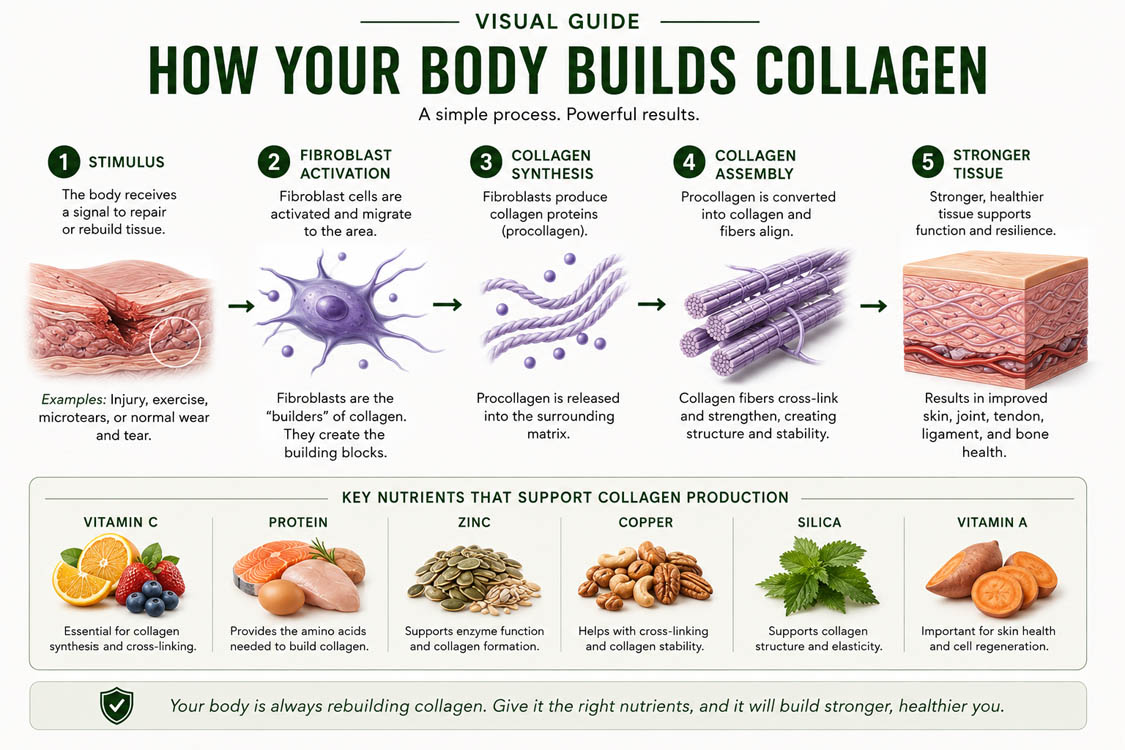
Meet Your Fibroblasts
If collagen is the construction material...
Fibroblasts are the construction workers.
Fibroblasts are specialized cells responsible for producing:
- Collagen
- Elastin
- Components of tendons
- Ligaments
- Scar tissue
- Connective tissue throughout the body
Whenever you cut your skin...
Recover from an injury...
Or adapt to resistance training...
Fibroblasts get to work.
Researchers believe collagen peptides may help stimulate these cells to increase collagen production and tissue remodeling.
The Golfer's Perspective
Every practice session creates tiny amounts of stress within your tendons and ligaments.
That's not necessarily a bad thing.
Your body adapts to training by repairing those tissues.
The challenge is that connective tissue remodels much more slowly than muscle.
If you're practicing several times each week or playing multiple rounds supporting connective tissue recovery becomes increasingly important, especially as you age.
Collagen isn't a substitute for smart programming or proper recovery.
But it may provide another tool to help support the tissues that allow you to keep swinging.
Why These Amino Acids Matter
Unlike whey protein, collagen is rich in several unique amino acids.
The three most important are:
Glycine
The most abundant amino acid in collagen.
Supports:
- Connective tissue
- Wound healing
- Protein synthesis
- Formation of glutathione, one of the body's major antioxidant systems
Emerging research also suggests glycine may support healthy sleep quality in some individuals, although more research is needed.
Proline
An essential building block for collagen fibers.
Without adequate proline, collagen synthesis becomes less efficient.
Hydroxyproline
One of collagen's signature amino acids.
Hydroxyproline provides stability and strength to collagen fibers.
It is rarely found in significant amounts in other dietary proteins.
Did You Know?
Approximately one-third of every collagen molecule is made from glycine.
That's one reason collagen has a very different amino acid profile than whey protein, eggs, or meat.
It's also why collagen is excellent for connective tissue but not ideal as your primary protein source for building muscle.
Why Collagen Doesn't Replace Protein Powder
One of the biggest mistakes I see is people replacing their post-workout protein with collagen.
Here's the problem.
Collagen is an incomplete protein.
It contains very little leucine and essentially no tryptophan two amino acids that play important roles in muscle protein synthesis and overall protein quality.
If your goal is maximizing muscle growth or recovery after strength training, a complete protein such as whey, dairy, eggs, fish, meat, or a well-formulated plant protein remains the better choice.
Think of collagen as connective tissue nutrition, not muscle-building nutrition.
Both can have a place in a well-designed nutrition plan.
⭐ The Holistic Golfer™ Evidence Scorecard
| Category | Rating | Why It Earned This Score |
| Scientific Evidence | ⭐⭐⭐⭐☆ | Strong evidence that collagen peptides are absorbed and biologically active, though some mechanisms remain under investigation. |
| Practical Value | ⭐⭐⭐⭐⭐ | Understanding collagen forms helps consumers avoid misleading marketing and choose products that fit their goals. |
| Marketing Confusion | ⭐⭐⭐⭐⭐ | One of the most misunderstood areas of the supplement industry. |
| Cost Effectiveness | ⭐⭐⭐⭐⭐ | Knowing the terminology can prevent overspending on products that differ more in branding than formulation. |
| My Recommendation | ⭐⭐⭐⭐⭐ | Learn the terminology before you buy. It may save you money and help you choose a supplement that actually meets your needs. |
Up Next
Now that you understand how collagen works, the next logical question is:
Does taking collagen actually improve your health?
In Part 3, we'll examine the human clinical research on:
- Skin aging
- Wrinkle reduction
- Joint pain
- Osteoarthritis
- Tendon injuries
- Athletic recovery
- Bone health
Most importantly, we'll separate the benefits that are well-supported by science from the claims that are mostly marketing.
Part 3: Does Collagen Actually Work?
What Human Research Says About Skin, Joints, Tendons, Bones, and Exercise Recovery
Understanding how collagen is digested and used by the body is important, but it does not answer the question most people really care about:
Does taking a collagen supplement produce noticeable results?
The honest answer is:
It can, depending on what you expect it to accomplish.
The strongest evidence supports collagen supplementation for certain aspects of skin health and joint comfort. Research involving tendons, bones, exercise recovery, and body composition is promising, but it is not equally strong across every category.
Collagen also does not work overnight. Most clinical trials showing meaningful improvements have lasted approximately 8–24 weeks, and some studies involving bones or chronic tendon problems have continued for six months or longer.
That is important because supplement advertising often creates unrealistic expectations. A photograph of smooth skin or a pain-free athlete may imply immediate transformation, but connective tissues remodel slowly. Collagen should be viewed as a long-term nutritional tool, not a quick fix.
Collagen and Skin Health
Skin health is probably the most heavily advertised use of collagen.
Companies commonly claim that collagen can:
- Improve skin hydration
- Increase elasticity
- Reduce the appearance of wrinkles
- Produce younger-looking skin
- Strengthen hair and nails
Of these claims, hydration and elasticity currently have the strongest scientific support.
A 2023 systematic review and meta-analysis examined 26 randomized controlled trials involving 1,721 participants. The combined results indicated that hydrolyzed collagen supplementation significantly improved skin hydration and elasticity compared with placebo.
An earlier meta-analysis also reported favorable changes in hydration, elasticity, and wrinkles following hydrolyzed collagen supplementation. Many of the included interventions lasted approximately 8–12 weeks, although products, dosages, study populations, and outcome measurements varied considerably.
That does not mean collagen functions like a cosmetic procedure. The improvements found in research are generally modest. Collagen may help support skin quality over time, but advertisements showing dramatic “before and after” transformations should be viewed skeptically.
Research Spotlight
How convincing is the evidence for younger-looking skin?
A more recent meta-analysis published in 2025 reached an important and more cautious conclusion.
When researchers combined all 23 included randomized trials, collagen supplementation appeared to improve hydration, elasticity, and wrinkles. However, when they separated the studies according to funding source, the independently funded studies did not show the same significant benefits observed in industry-funded trials.
That does not prove the positive studies were inaccurate. Industry funding does not automatically invalidate research.
However, it does remind us to ask:
- Who paid for the study?
- Was the exact product sold by the sponsor?
- Was the study large enough?
- Were the researchers and participants properly blinded?
- Was the improvement meaningful or simply statistically detectable?
My Take
I believe the evidence supports a potential modest benefit for skin hydration and elasticity, particularly after consistent use for several months.
I would not promise dramatic wrinkle removal, thicker hair, or a major reversal of visible aging. Those claims move well beyond what the current evidence can confidently guarantee.
Evidence Rating for Skin Hydration and Elasticity: ⭐⭐⭐⭐☆
Evidence Rating for Dramatic Anti-Aging Claims: ⭐⭐☆☆☆
Marketing Myth
“Collagen Will Reverse Aging.”
Verdict: Marketing exaggeration
Collagen cannot stop the natural aging process.
Skin appearance is influenced by many factors, including:
- Genetics
- Sun exposure
- Smoking
- Sleep
- Hydration
- Overall nutrition
- Hormonal changes
- Environmental exposure
A collagen supplement may provide modest support, but it cannot erase decades of sun damage or replace proper skin protection.
When a company uses phrases such as reverse aging, erase wrinkles, or restore youthful skin, it is turning limited evidence into an unrealistic promise.
Collagen and Joint Comfort
Joint health is another area where collagen research is relatively encouraging.
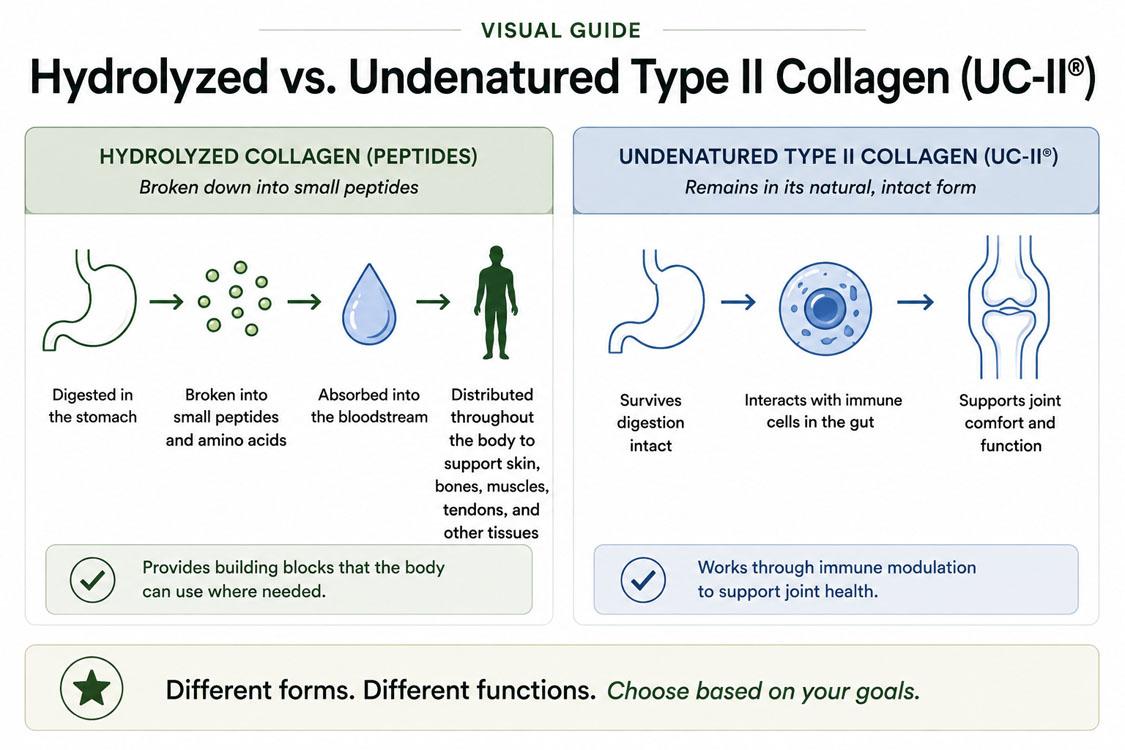
However, it is important to distinguish between two different products:
- Hydrolyzed collagen peptides
- Undenatured Type II collagen, often sold as UC-II®
Hydrolyzed collagen provides smaller peptides and amino acids that may support connective-tissue metabolism.
Undenatured Type II collagen appears to work through an immune-related process called oral tolerance. It is generally used in much smaller amounts than hydrolyzed collagen peptides.
A 2025 meta-analysis concluded that oral collagen supplementation produced statistically and clinically meaningful improvements in knee osteoarthritis pain and function.
A separate meta-analysis of collagen peptides also found significant pain reduction among people with knee osteoarthritis, although the researchers emphasized possible bias and the need for additional high-quality trials.
Research on undenatured Type II collagen has likewise produced promising results. A 2018 review of dietary supplements for osteoarthritis found that undenatured Type II collagen produced a clinically important improvement in medium-term pain, although long-term effects remained uncertain.
The Golfer’s Perspective
For golfers, joint discomfort is not always caused by diagnosed osteoarthritis.
Repeated rounds and practice sessions can irritate the:
- Lead knee
- Hips
- Lower back
- Shoulders
- Elbows
- Wrists and hands
One randomized study involving 139 physically active adults with activity-related knee discomfort found that 5 grams of specific collagen peptides daily for 12 weeks reduced exercise-related knee pain compared with placebo.
That does not mean collagen can correct poor swing mechanics, weak supporting muscles, excessive practice volume, or inadequate recovery.
However, collagen may be a useful addition to a larger plan involving:
- Strength training
- Mobility work
- Progressive loading
- Adequate recovery
- Proper medical evaluation when pain persists
Evidence Rating for Joint Comfort: ⭐⭐⭐⭐☆
Evidence Rating for Treating Joint Disease by Itself: ⭐⭐☆☆☆
Important Distinction
Collagen may help reduce symptoms, but reducing discomfort is not the same as rebuilding a damaged joint.
Current studies often measure:
- Pain
- Stiffness
- Self-reported function
- Ability to perform daily activities
Those outcomes matter. Feeling better and moving more easily are valuable improvements.
But consumers should be cautious when companies claim their collagen product can regrow cartilage, reverse arthritis, or rebuild joints. Those statements are much stronger than the available evidence supports.
Collagen and Tendons
Tendon health is especially relevant to golfers, runners, lifters, and aging athletes.
Tendons are primarily composed of Type I collagen and are responsible for transferring force from muscle to bone. Unlike muscle tissue, tendons receive a relatively limited blood supply and often adapt slowly to training.
The idea behind collagen supplementation is reasonable: provide collagen-rich amino acids and peptides around the time tendons are being stimulated through exercise.
But the human research is mixed.
A small pilot study involving people with chronic Achilles tendinopathy found that specific collagen peptides combined with a structured calf-strengthening program improved symptoms. However, because the supplement was used alongside exercise and because the study was small, we cannot conclude that collagen alone produced the improvement.
A 2023 randomized trial found that collagen peptides enhanced certain changes in patellar-tendon morphology during 14 weeks of high-load resistance training.
However, another controlled study in healthy young men found that collagen supplementation did not enhance resistance-training-induced tendon size or mechanical properties compared with placebo.
A 2024 systematic review and meta-analysis concluded that collagen combined with exercise may improve tendon morphology and several musculoskeletal outcomes, but the certainty of the evidence was only low to moderate.
Research Spotlight
Is collagen useful for an injured tendon?
The research suggests that collagen may be most useful when it accompanies an appropriate rehabilitation program.
Exercise provides the signal that tells the tendon it needs to adapt.
Collagen may provide nutritional support for that adaptation.
Without progressive loading, collagen supplementation alone is unlikely to rehabilitate an injured tendon.
This is similar to taking protein powder without exercising. The nutrient may provide useful building materials, but the body still needs an appropriate training stimulus.
My Take
For someone completing a structured rehabilitation program for golfer’s elbow, patellar tendinopathy, Achilles tendinopathy, or another overuse injury, collagen may be worth considering.
I would never recommend it as a replacement for:
- A proper diagnosis
- Progressive tendon loading
- Correcting training errors
- Improving movement mechanics
- Allowing sufficient recovery
But it can help in the recovery process, allowing your body to repair itself appropriately. What you are doing is giving your body all the tools that it needs to properly recover. Your body is still repairing itself; collagen is not some kind of magic healer.
Evidence Rating for Tendon Support Alongside Exercise: ⭐⭐⭐☆☆
Evidence Rating for Collagen Alone Healing Tendon Injuries: ⭐☆☆☆☆
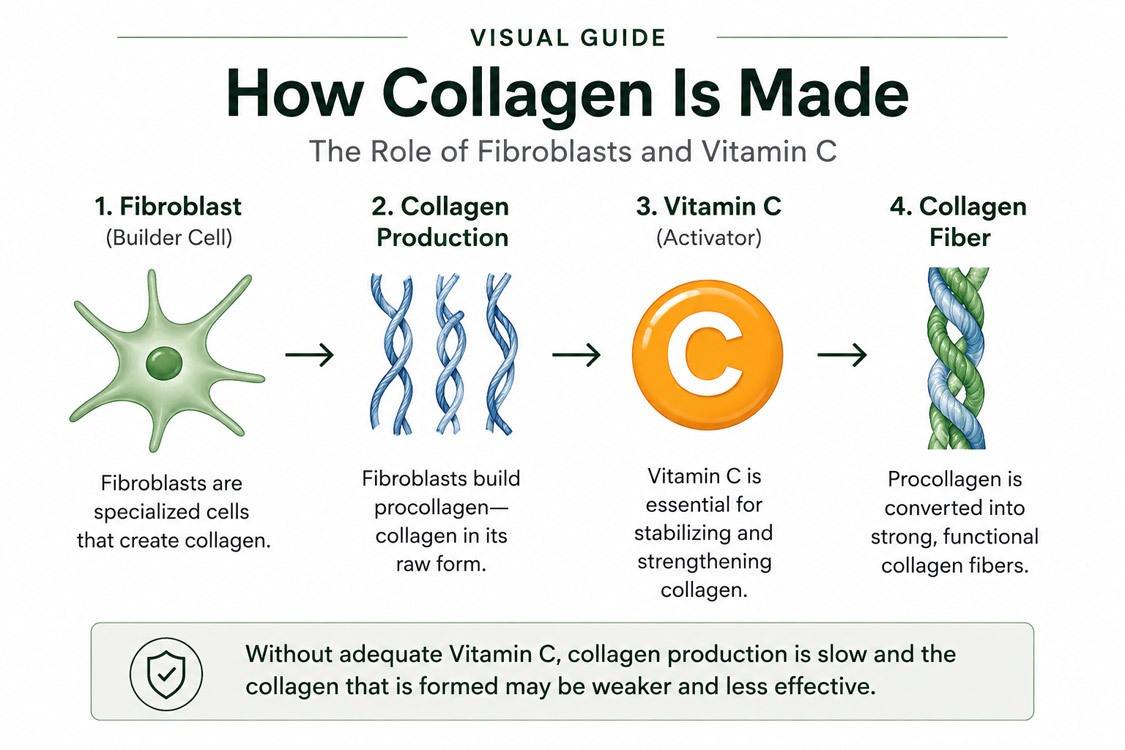
Does Vitamin C Make Collagen More Effective?
Vitamin C is essential for normal collagen synthesis, but that fact is sometimes misrepresented in supplement advertising.
Your body requires vitamin C to form and stabilize collagen. If someone is deficient, collagen production and wound healing can be impaired.
A small laboratory and exercise study found that vitamin C-enriched gelatin taken before intermittent exercise increased a blood marker associated with collagen synthesis. The results were biologically interesting, but the study did not prove that the protocol prevents injuries or heals damaged tendons in real-world athletes.
This distinction matters.
Vitamin C supports your body’s collagen-building machinery, but it does not necessarily mean everyone needs a high-dose vitamin C supplement.
Many people can obtain adequate vitamin C through foods such as:
- Bell peppers
- Citrus fruit
- Kiwi
- Strawberries
- Broccoli
- Brussels sprouts
Taking collagen with a vitamin C-rich meal or snack is a sensible approach. Megadosing vitamin C is unlikely to provide additional collagen benefits once your nutritional needs are met.
Collagen and Bone Health
Bone is sometimes imagined as a solid block of calcium, but its structure also contains a collagen-rich protein framework.
Type I collagen gives bone flexibility and tensile strength, while minerals contribute hardness and rigidity.
Several studies have investigated whether collagen peptides can support bone health, particularly in postmenopausal women.
A randomized controlled trial involving postmenopausal women with age-related bone loss reported that 5 grams of specific collagen peptides daily for 12 months increased bone-mineral density compared with placebo and favorably influenced certain bone-turnover markers.
A later follow-up study suggested that continued supplementation was associated with further improvements in spinal and femoral-neck bone-mineral density.
These results are promising, but they should be interpreted carefully. Much of the positive research has used specific branded collagen peptides in relatively narrow populations.
Collagen should not be presented as a substitute for established bone-health strategies, including:
- Resistance training
- Weight-bearing exercise
- Adequate calcium
- Adequate vitamin D
- Sufficient total protein
- Medical care for osteopenia or osteoporosis
Evidence Rating for Bone Health: ⭐⭐⭐☆☆
Marketing Myth
“Collagen Is All You Need for Strong Bones.”
Verdict: False
Collagen contributes to the protein framework of bone, but healthy bones require far more than collagen.
Someone who takes collagen while remaining sedentary, consuming inadequate calcium or vitamin D, or ignoring diagnosed bone loss is not addressing the entire problem.
Think of collagen as one possible supporting piece, not the foundation of osteoporosis prevention or treatment.
Collagen and Exercise Recovery
Some collagen products are advertised as post-workout recovery supplements.
This requires careful explanation.
A 2021 systematic review found that collagen supplementation appeared most beneficial for joint function and joint pain. Some studies reported improvements in body composition, strength, or recovery, but the evidence was less consistent than it was for joint-related outcomes.
Collagen is rich in glycine, proline, and hydroxyproline, but it contains relatively little leucine and lacks an ideal essential-amino-acid profile for stimulating muscle protein synthesis.
That means collagen should not replace:
- Whey protein
- Eggs
- Dairy
- Meat
- Fish
- A complete plant-protein blend
when the primary goal is building or preserving muscle.
One study in older men found that collagen combined with resistance training improved fat-free mass and strength more than placebo. However, this does not establish collagen as superior to complete proteins such as whey, particularly because the control group did not receive an equal amount of another protein source.
Did You Know?
A protein can increase the total number of grams listed on a nutrition label without being ideal for muscle growth.
That is why collagen-containing bars and shakes may display impressive protein numbers while still providing less muscle-building value than a complete protein.
Collagen is better viewed as a specialized connective-tissue supplement than as your main post-workout protein.
Evidence Rating for Connective-Tissue Recovery: ⭐⭐⭐☆☆
Evidence Rating as a Primary Muscle-Building Protein: ⭐⭐☆☆☆
⭐ The Holistic Golfer™ Evidence Scorecard
| Category | Rating | Why It Earned This Score |
|---|---|---|
| Scientific Evidence | ⭐⭐⭐⭐☆ | Strong human studies support meaningful improvements in skin hydration, joint comfort, and connective tissue health. Evidence for tendons, bones, and athletic recovery continues to grow. |
| Practical Value | ⭐⭐⭐⭐⭐ | Collagen is easy to incorporate into a daily routine and may benefit active adults looking to support long-term connective tissue health. |
| Marketing Confusion | ⭐⭐⭐⭐⭐ | Few supplements create more confusion. Understanding collagen types, dosages, and marketing language can save consumers from spending money on products that don't fit their goals. |
| Cost Effectiveness | ⭐⭐⭐⭐⭐ | A quality collagen supplement is generally affordable, and choosing the correct type provides excellent value compared to many heavily marketed alternatives. |
| My Recommendation | ⭐⭐⭐⭐⭐ | When combined with proper nutrition, resistance training, and realistic expectations, collagen is one of the most evidence-supported supplements for connective tissue health. Choose the right type, ignore the hype, and be patient—results take time. |
My Take
If a golfer walked into my gym and asked whether collagen was worth taking, my answer would depend on why they wanted it.
For someone interested in long-term connective-tissue support, recurring activity-related joint discomfort, or supporting a properly designed tendon-rehabilitation program, I believe collagen is a reasonable supplement to consider.
I would be less enthusiastic if the person expected collagen to build large amounts of muscle, instantly eliminate pain, rebuild damaged cartilage, or dramatically reverse visible aging.
I would also make sure that the fundamentals were already in place:
- Sufficient total protein
- A nutrient-dense diet
- Regular resistance training
- Appropriate mobility work
- Adequate sleep and recovery
- A professional evaluation for persistent pain
Collagen may help support the structure of your body, but no supplement can compensate for ignoring the behaviors that keep that structure healthy.
The Bottom Line
Collagen is neither a miracle nor a scam.
The research suggests that it may provide modest but meaningful support for skin hydration, skin elasticity, and joint comfort. Its potential role in tendon adaptation and bone health is promising, especially when it is combined with appropriate exercise and overall nutrition.
The mistake is not believing that collagen can work.
The mistake is believing that it can do everything.
In Part 4, we will examine how to choose a collagen product, including:
- Effective dosages
- When to take collagen
- Whether timing around exercise matters
- Marine versus bovine versus chicken collagen
- Hydrolyzed collagen versus UC-II®
- Third-party testing
- Proprietary blends
- Added ingredients
- The most common collagen marketing tricks
Most importantly, we will build a practical buyer’s guide that helps you determine whether a product is worth your money before you ever reach the checkout counter.
Part 4: The Ultimate Collagen Buyer's Guide
How to Choose the Right Collagen Without Wasting Your Money
After reading this far, you already know something that many supplement shoppers don't.
Not all collagen is the same.
Different collagen types serve different purposes, and understanding those differences is far more important than choosing the most expensive product on the shelf.
This chapter is designed to answer one simple question:
If I walked into a supplement store today, what would I actually buy?
Let's start with the biggest decision.
Step 1: Choose the Right Type of Collagen
This is where most purchasing mistakes happen.
Companies love to advertise products containing five, six, or even ten different collagen types.
That sounds impressive.
But remember...
More isn't automatically better.
The goal isn't to buy the product with the most collagen types.
The goal is to buy the collagen that best matches your goal.
| Your Goal | Best Choice | Why |
|---|---|---|
| Healthier skin | Type I | The primary collagen found in skin and the type most often studied for hydration and elasticity. |
| Joint comfort | UC-II® (Type II) | Specifically researched for cartilage and osteoarthritis-related symptoms. |
| Tendons & ligaments | Types I & III | The major collagen types found in tendons and ligaments. |
| Bone support | Type I | The predominant collagen in bone. |
| General wellness | Types I & III | A practical choice for overall connective-tissue support. |
Marketing Myth
"Five Types of Collagen Are Better Than One."
Reality
A product containing five collagen types may sound superior, but if each type is present in very small amounts, you may not receive enough of the collagen that actually addresses your goal.
I'd rather see a well-formulated product with one or two clinically relevant collagen types than a "kitchen sink" formula that spreads the dose too thin.
Step 2: Decide on the Source
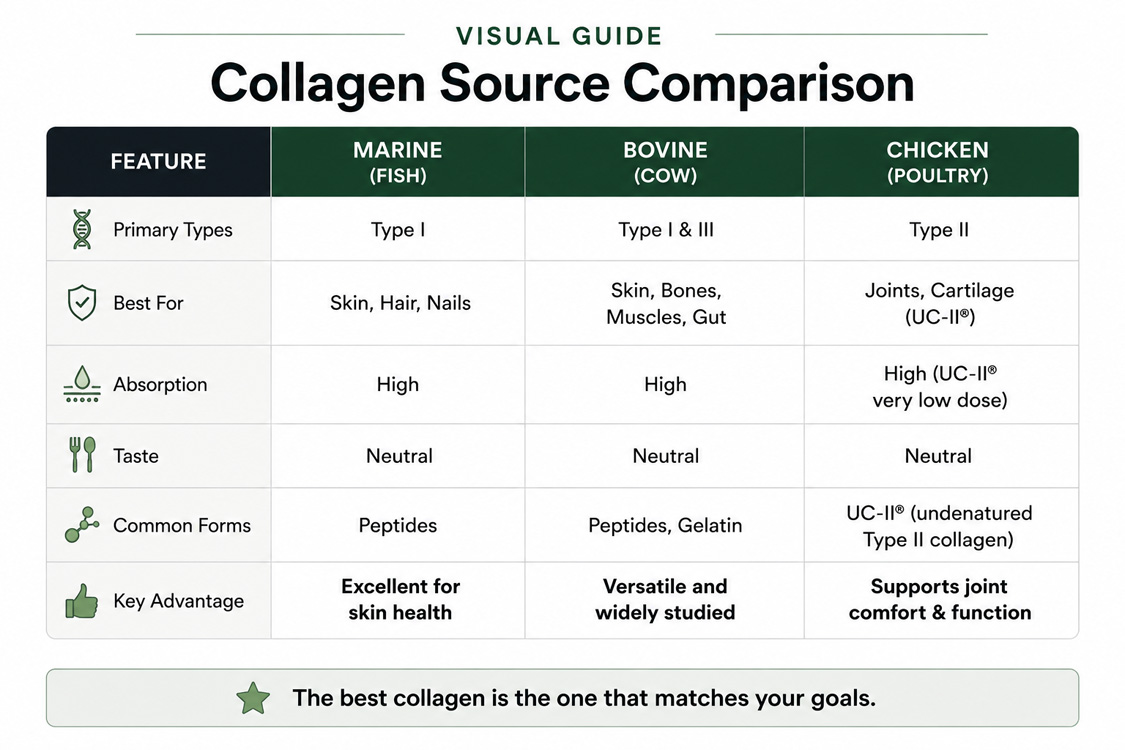
Collagen supplements generally come from three primary sources.
Bovine Collagen
What?
Derived from cows.
Usually provides Types I and III collagen.
Why?
Excellent all-around choice for active adults.
Supports skin, tendons, ligaments, and bone.
Often one of the best values.
Why Not?
Not appropriate for individuals who avoid beef for dietary, cultural, or religious reasons.
Marine Collagen
What?
Derived from fish.
Primarily Type I collagen.
Why?
A good option for those focused on skin health or who prefer to avoid bovine products.
Why Not?
Typically more expensive.
Not suitable for people with fish allergies.
Current evidence does not show that marine collagen is universally superior to bovine collagen it simply offers a different source of primarily the same collagen type.
Chicken Collagen
What?
Derived from chicken cartilage.
Often rich in Type II collagen.
Why?
Most appropriate for people specifically seeking cartilage support or considering UC-II® products.
Why Not?
Less useful if your primary goal is skin, tendon, or bone support.
The Golfer's Perspective
When golfers ask me about collagen, they usually aren't trying to improve their hair.
They're trying to keep playing golf comfortably for another 20 or 30 years.
For that reason, my first recommendation is usually a high-quality Type I & III hydrolyzed bovine collagen for general connective-tissue support.
If someone has significant osteoarthritis or chronic knee discomfort, I may also discuss an undenatured Type II collagen product with their healthcare provider as part of a broader treatment plan.
Step 3: Read the Ingredient Label
A supplement label tells you far more than the front of the container ever will.
When I pick up a collagen supplement, I ask myself these questions:
✅ Does the label clearly identify the collagen type?
✅ Does it list the amount per serving?
✅ Is the ingredient list short and easy to understand?
✅ Does the company explain where the collagen comes from?
If the label hides more information than it provides, I move on.
Step 4: Look for Third-Party Testing
Independent testing doesn't guarantee a supplement is effective, but it can increase confidence that the product contains what the label claims and has been screened for certain contaminants.
Examples include:
- NSF Certified for Sport®
- USP Verified
- Informed Sport
Not every quality supplement carries these certifications, but when they are present, they provide an added level of reassurance.
Marketing Myth
"Clinically Proven"
This phrase appears everywhere.
But ask yourself:
Was the actual product tested?
Or did the company simply reference research performed on collagen in general?
Those are two very different things.
Step 5: Do You Need Vitamin C?
Yes but probably not for the reason many advertisements suggest.
Vitamin C is essential for normal collagen synthesis.
Without adequate vitamin C, your body cannot efficiently build and stabilize collagen.
Fortunately, most people can meet their vitamin C needs through a balanced diet.
Excellent food sources include:
- Bell peppers
- Oranges
- Kiwi
- Strawberries
- Broccoli
- Brussels sprouts
Taking collagen with a meal containing vitamin C is a practical strategy.
For many healthy adults, there is no convincing evidence that megadoses of vitamin C provide additional collagen benefits once normal requirements are met.
Step 6: What About Zinc and Copper?
Zinc contributes to tissue repair and plays a role in normal protein synthesis.
Copper is also essential because it helps strengthen collagen fibers through enzymatic cross-linking.
Here's the catch.
High-dose zinc supplements taken for long periods can reduce copper absorption.
More is not always better.
Unless you've been advised otherwise by your healthcare provider, the goal should be meeting not dramatically exceeding your nutritional needs.
Did You Know?
Many collagen products are manufactured in the same facilities.
The biggest difference between two products isn't always the collagen itself.
Sometimes you're paying for branding, packaging, influencer marketing, or celebrity endorsements rather than meaningful differences in formulation.
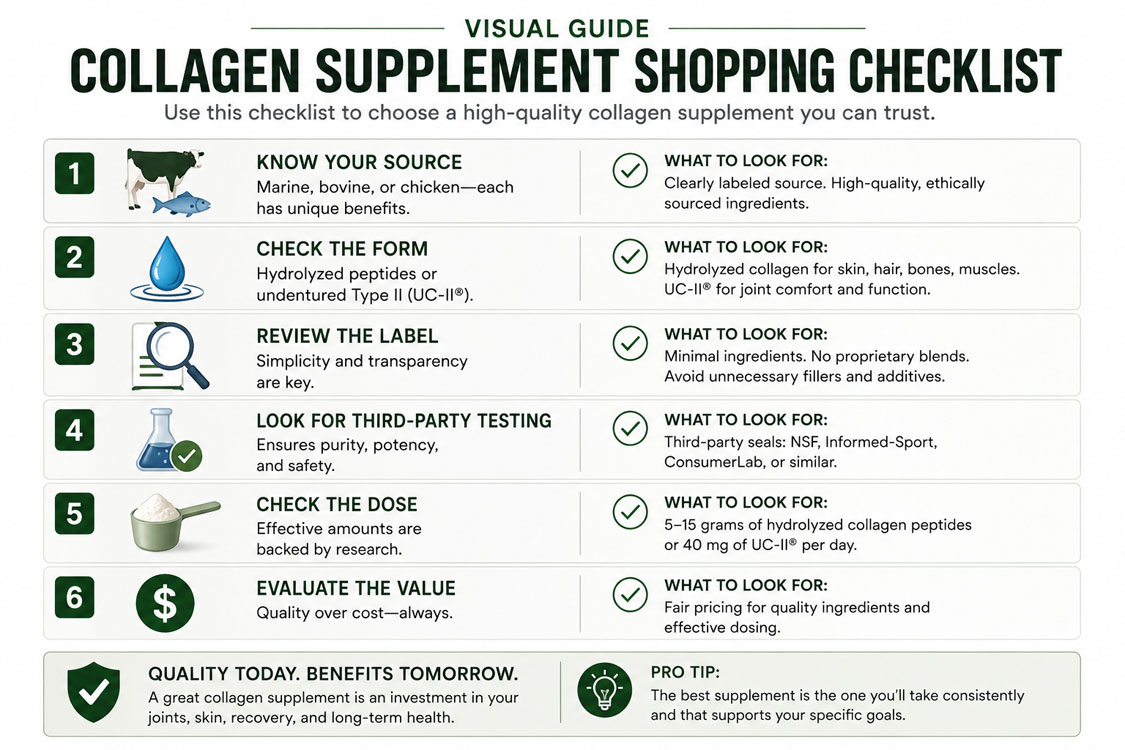
The Holistic Golfer™ Shopping Checklist
Before you buy a collagen supplement, ask yourself:
☐ Does it contain the collagen type that matches my goal?
☐ Is the serving size consistent with amounts used in research?
☐ Does the company clearly identify the collagen source?
☐ Is the ingredient list transparent?
☐ Does it avoid unnecessary fillers and artificial ingredients?
☐ Has it been third-party tested?
☐ Is the price reasonable for what I'm getting?
☐ Am I buying this because of science—or because of marketing?
My Take
If I walked into a supplement store today with my own money, I'd spend very little time looking at the front of the package.
Instead, I'd turn it over.
I'd read the ingredient list.
I'd look for transparent labeling.
I'd compare serving sizes with the doses used in clinical studies.
I'd check for third-party testing.
And I'd ask one simple question:
"Does this product actually fit my goal?"
The companies that spend the most money on flashy labels and celebrity endorsements don't always spend the most money on product quality.
The best supplement is rarely the loudest one on the shelf.
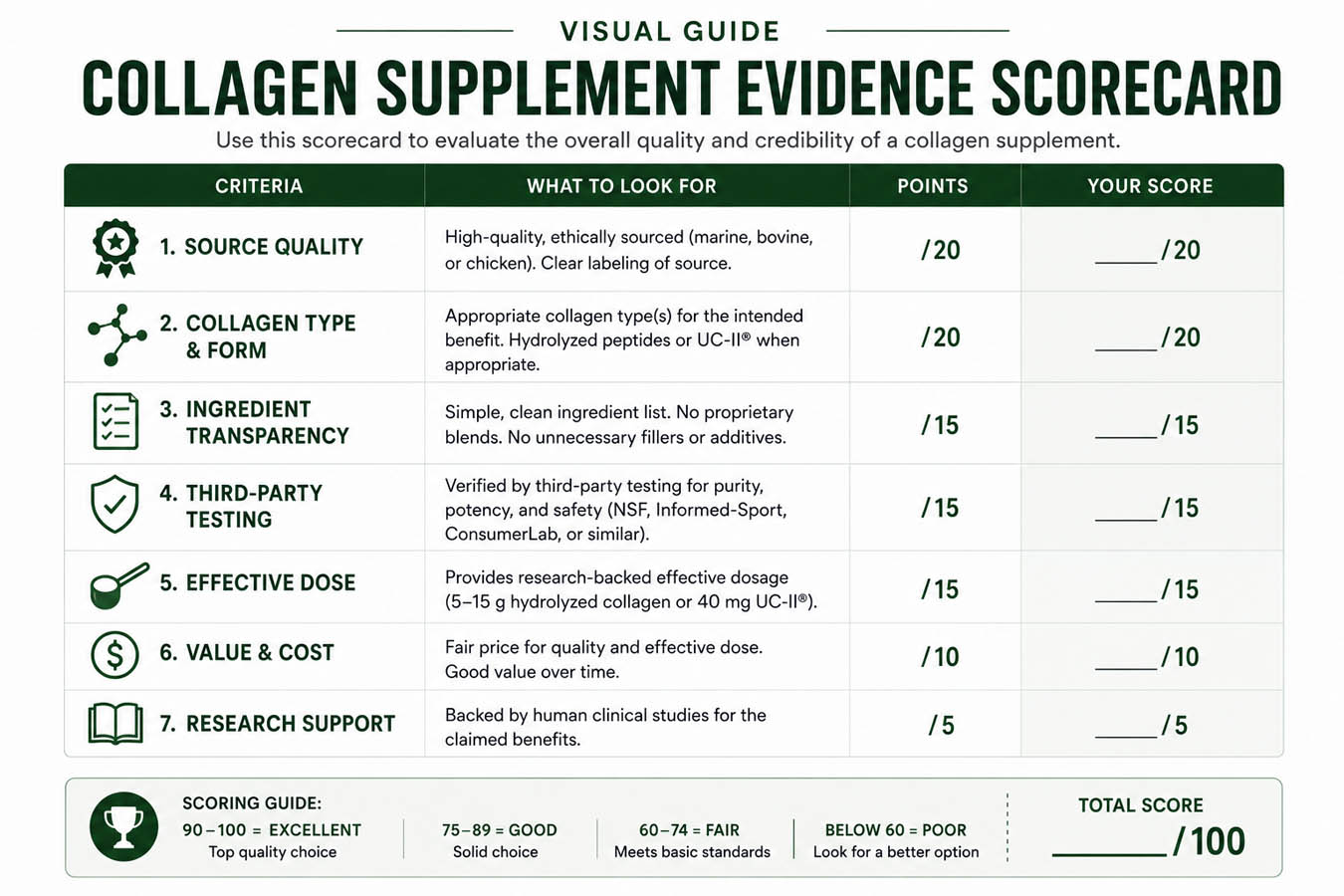
⭐ The Holistic Golfer™ Evidence Scorecard
| Category | Rating | Why It Earned This Score |
| Scientific Evidence | ⭐⭐⭐⭐☆ | Research provides practical guidance on collagen types, dosage, and ingredient selection, allowing consumers to make informed purchasing decisions. |
| Practical Value | ⭐⭐⭐⭐⭐ | Learning how to read labels and choose the right collagen type can immediately improve purchasing decisions and reduce wasted money. |
| Marketing Confusion | ⭐⭐⭐⭐⭐ | The collagen market is filled with misleading claims, making consumer education one of the most valuable tools available. |
| Cost Effectiveness | ⭐⭐⭐⭐⭐ | Buying the right product the first time often saves money compared with chasing heavily marketed formulas. |
| My Recommendation | ⭐⭐⭐⭐⭐ | Spend your money on quality ingredients, transparent labeling, and products backed by evidence—not hype. A well-chosen collagen supplement is far more valuable than the most expensive one on the shelf. |
Before You Go...
If you're tempted to stop reading here, I'd encourage you to keep going just a little further.
The next section isn't a traditional list of references.
I've organized it as a Research Library designed to help you explore the science at whatever level interests you. Whether you simply want to see where the information came from or you're the type of person who enjoys diving into the original research, I hope you'll find it useful.
I've also included Key Takeaways, categorized Further Reading, and a few additional resources that I believe can help you become a more informed consumer.
My goal has never been to overwhelm you with scientific papers.
It's to make the science easier to understand and easier to trust.
When you're finished exploring the Research Library, I'd also invite you to read one final section. It's where I leave the science behind for a moment and share what I hope you'll take away from this guide.
Research Library & Further Reading
The goal of this guide isn't simply to tell you what the research says it's to help you explore the evidence for yourself.
The references below are organized by the strength of the available evidence, beginning with systematic reviews and meta-analyses, which summarize the findings of multiple clinical studies. As you move down the list, you'll find individual clinical trials, foundational scientific research, and trusted professional resources.
You don't have to read every paper to make an informed decision. My goal is to organize the science so you can easily find the level of detail that interests you.
Why These References?
Not all scientific studies carry the same weight.
Throughout this guide, I've prioritized the highest-quality evidence available, including:
- Systematic Reviews – These summarize multiple high-quality studies to provide the best overall picture of the available evidence.
- Meta-Analyses – These statistically combine data from multiple studies, increasing confidence in the conclusions when the included research is strong.
- Randomized Controlled Trials (RCTs) – Often considered the gold standard for testing the effectiveness of an intervention in humans.
- Position Statements and Consensus Papers – Recommendations from respected scientific organizations that review the totality of available evidence.
- Basic Science Research – Studies that help explain how collagen works within the body, even if they don't directly answer clinical questions.
When lower-quality evidence is discussed, I've tried to identify it as such. Science is rarely black and white, and I believe it's important to be honest about both the strengths and the limitations of the available research.
Key Takeaways from the Research
✔ Collagen is one of the more evidence-supported supplements for connective tissue health, particularly for skin hydration and joint comfort.
✔ Different collagen types serve different purposes. Choosing the right type is more important than buying the product with the most ingredients.
✔ Vitamin C is essential for normal collagen synthesis, but most healthy people can meet their needs through a balanced diet rather than high-dose supplementation.
✔ Collagen works best as part of a larger strategy that includes resistance training, proper nutrition, quality sleep, and appropriate recovery.
✔ Many marketing claims extend beyond what the current evidence supports. Understanding the science can help you spend your money more wisely.
Systematic Reviews & Meta-Analyses
(Highest Level of Evidence)
These studies combine the results of multiple clinical trials and generally provide the strongest overview of the available evidence.
- Pu S, et al. (2023). The Effects of Oral Collagen for Skin Anti-Aging: A Systematic Review and Meta-Analysis. Nutrients.
- Reviewed 26 randomized controlled trials involving 1,721 participants and found improvements in skin hydration and elasticity.
- de Miranda RB, et al. (2021). Effects of Hydrolyzed Collagen Supplementation on Skin Aging: A Systematic Review and Meta-Analysis.
- Summarized evidence supporting modest improvements in skin hydration, elasticity, and wrinkles.
- Rivera-Mancía S, et al. (2025). Oral Collagen Supplementation for Skin Health: A Systematic Review and Meta-analysis.
- Included an analysis of industry-funded versus independently funded studies, highlighting the importance of evaluating potential sources of bias.
- Wang Z, et al. (2025). The Efficacy and Safety of Oral Collagen Supplements in Knee Osteoarthritis: A Meta-analysis.
- Found meaningful improvements in pain and physical function among individuals with knee osteoarthritis.
- Xie Y, et al. (2023). Collagen Peptides for Knee Osteoarthritis: A Systematic Review and Meta-analysis.
- Reported improvements in pain while also emphasizing the need for additional high-quality research.
Randomized Controlled Trials
These individual human studies provide much of the evidence discussed throughout this guide.
- Zdzieblik D, et al. (2015) – Resistance training and collagen peptides.
- Zdzieblik D, et al. (2017) – Activity-related knee pain.
- König D, et al. (2018) – Bone mineral density.
- König D, et al. (2021) – Long-term bone density follow-up.
- Shaw G, et al. (2017) – Vitamin C-enriched gelatin and collagen synthesis.
- Praet SFE, et al. (2019) – Achilles tendinopathy.
- Jerger S, et al. (2023) – Patellar tendon adaptation.
- Kongsgaard M, et al. (2023) – Tendon mechanical properties.
Basic Science & Collagen Biology
These papers explain the biology behind collagen, connective tissue, fibroblasts, and collagen synthesis.
- Ricard-Blum S. (2011). The Collagen Family.
- Shoulders MD & Raines RT. (2009). Collagen Structure and Stability.
Sports Nutrition & Professional Position Statements
These organizations regularly review the available evidence and publish recommendations for athletes and active adults.
- International Society of Sports Nutrition (ISSN)
- International Olympic Committee (IOC)
- Australian Institute of Sport (AIS) Sports Supplement Framework
Vitamins & Minerals
Because collagen synthesis depends on more than collagen itself.
- National Institutes of Health – Vitamin C Fact Sheet
- National Institutes of Health – Zinc Fact Sheet
- National Institutes of Health – Copper Fact Sheet
Consumer Resources
When purchasing supplements, I encourage looking beyond marketing claims.
Independent testing programs can help verify product quality.
- NSF Certified for Sport®
- USP Verified
- Informed Sport
Continue Your Learning
If you enjoyed this guide, you may also enjoy some of my other guides, I am working on them as you read this, so check back soon.
Final Thoughts
The purpose of this guide was never to convince you to buy collagen.
It was to help you understand it.
Health and fitness are full of strong opinions, persuasive marketing, and conflicting advice. My hope is that this guide gave you something more valuable than another recommendation—it gave you a framework for thinking critically about supplements and making informed decisions that fit your own goals and lifestyle.
Whether you decide collagen belongs in your routine or not, I hope you leave with greater confidence in your ability to evaluate the evidence, ask better questions, and make choices based on knowledge rather than hype.

Wellness Products And Services
Personal Training

Nutrition Consulting

Golf Fitness Training

Mental Focus for Golf